ROBIN MOISON COACHING
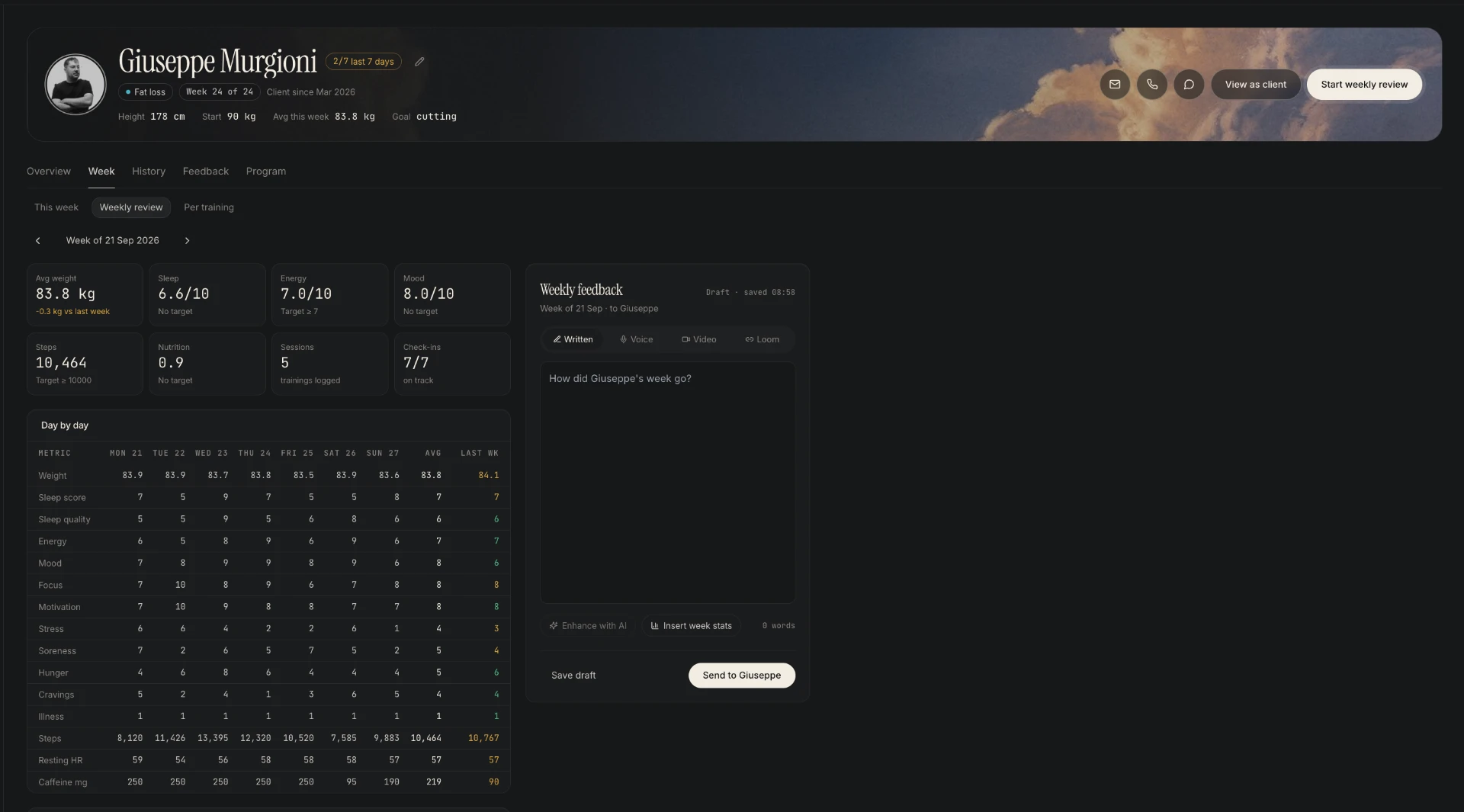
A coaching platform built around the weekly rhythm of a personal trainer: clients check in, the coach reviews, and progress is visible at a glance.
The features that carry the work.
- Client dashboard with weekly check-ins and progress photos
- Coach review flow with feedback per client, per week
- Training and nutrition plans assigned per client
- Training programs with split days, exercises, sets and rep ranges
- Per-plan performance tracking with session volume, history and benchmarking
- Daily, weekly and monthly trackers with 7-day goal scoring
- Competition prep timeline with pre-cut, cut, supercut, bulk and preseason phases
- AI-native coach overview that drafts the client summary and flags what needs attention
- AI assistant chat: ask anything about your clients or their progress in plain language
- Automated reminders so no check-in gets missed
How the platform works, piece by piece.
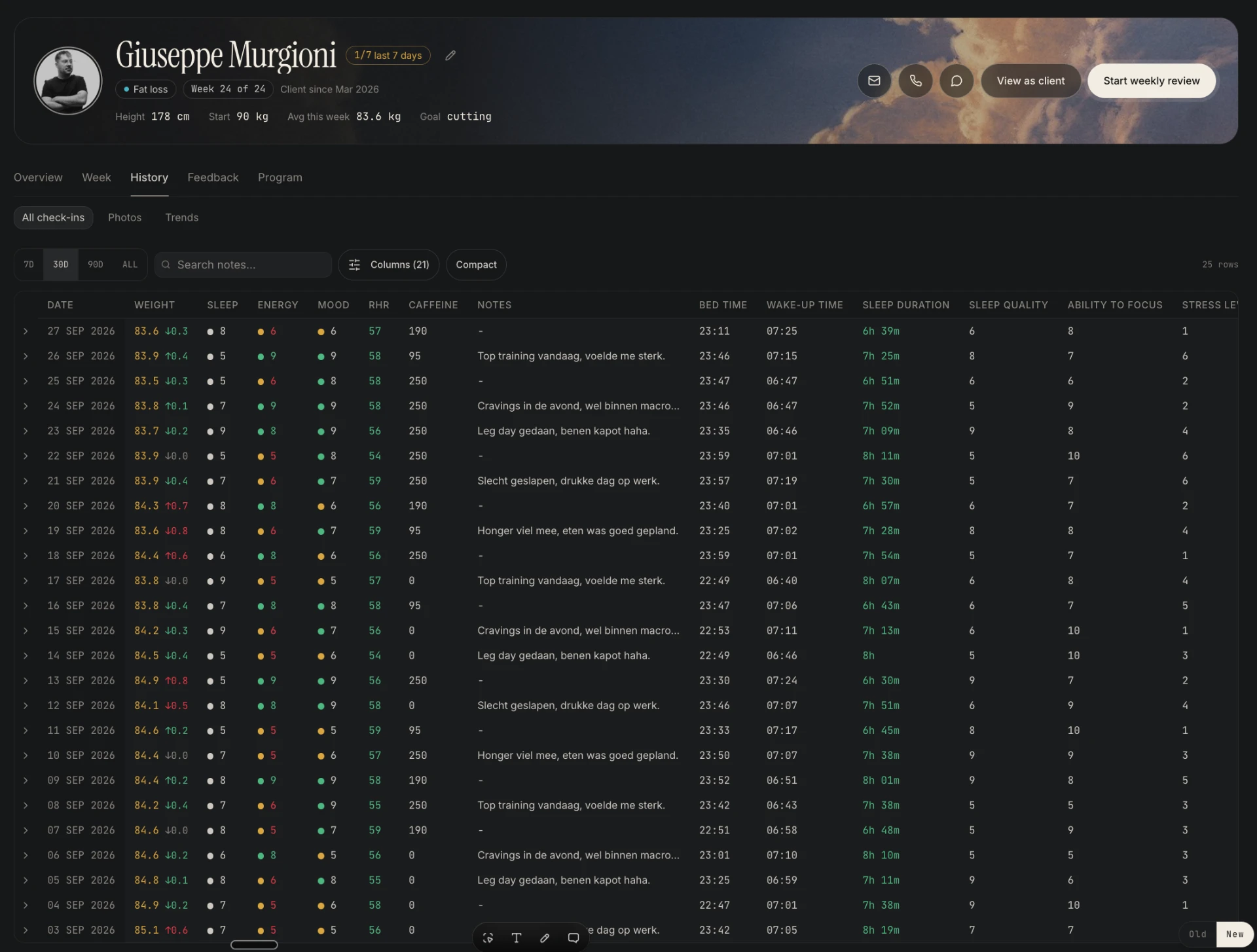
Day-to-day history sheet
The full history behind every check-in. Weight, sleep, energy, mood, resting heart rate and daily notes are logged day by day, giving the coach complete insight into how a client is actually performing between weekly reviews.
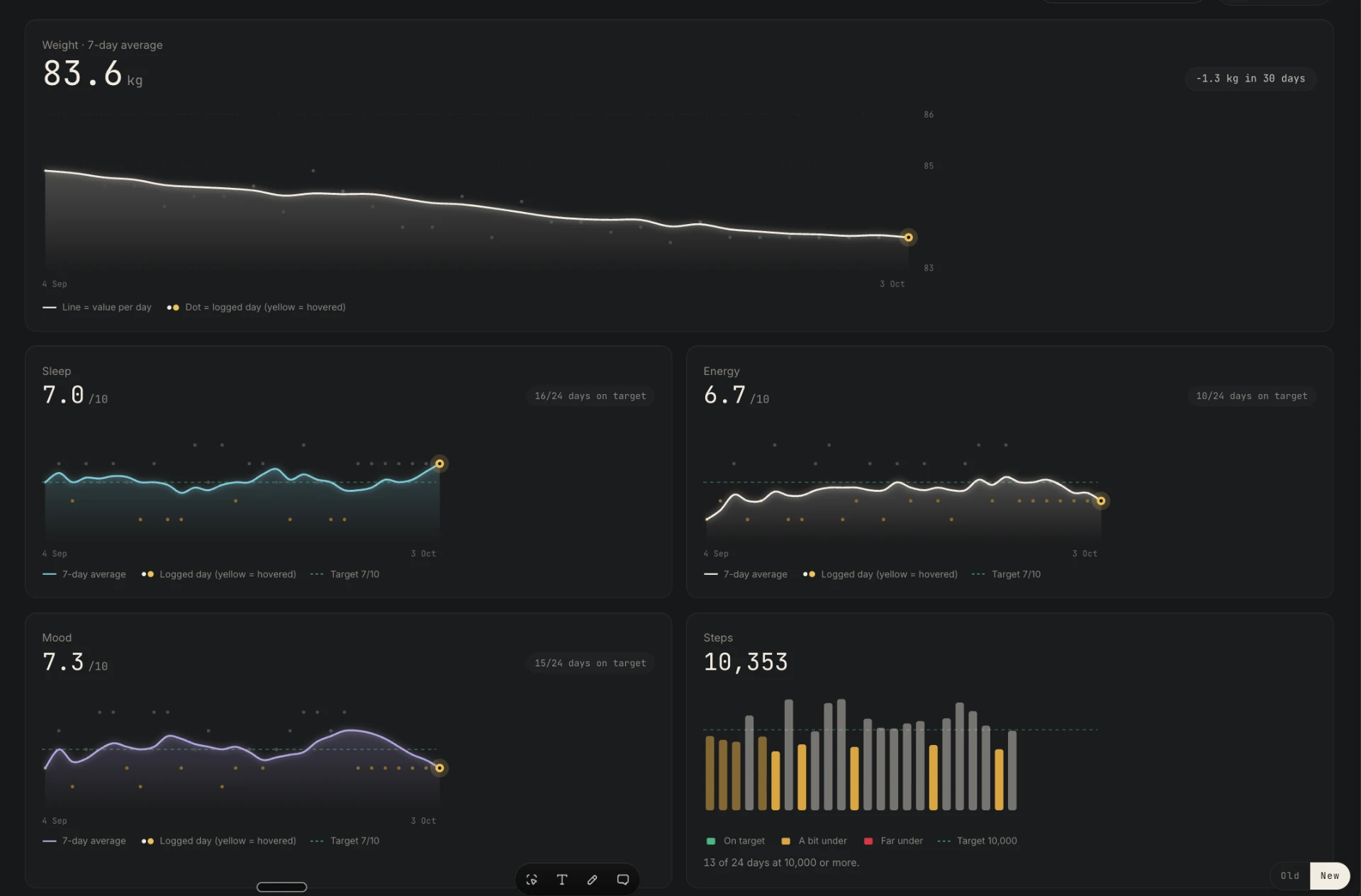
Trend dashboards
Every metric is measured as a trend, not a single number. Visual charts plot weight, sleep, energy, mood and steps over time as 7-day averages with per-day logged points, target lines and 30-day deltas, so both coach and client can see the direction of travel at a glance instead of digging through raw numbers.
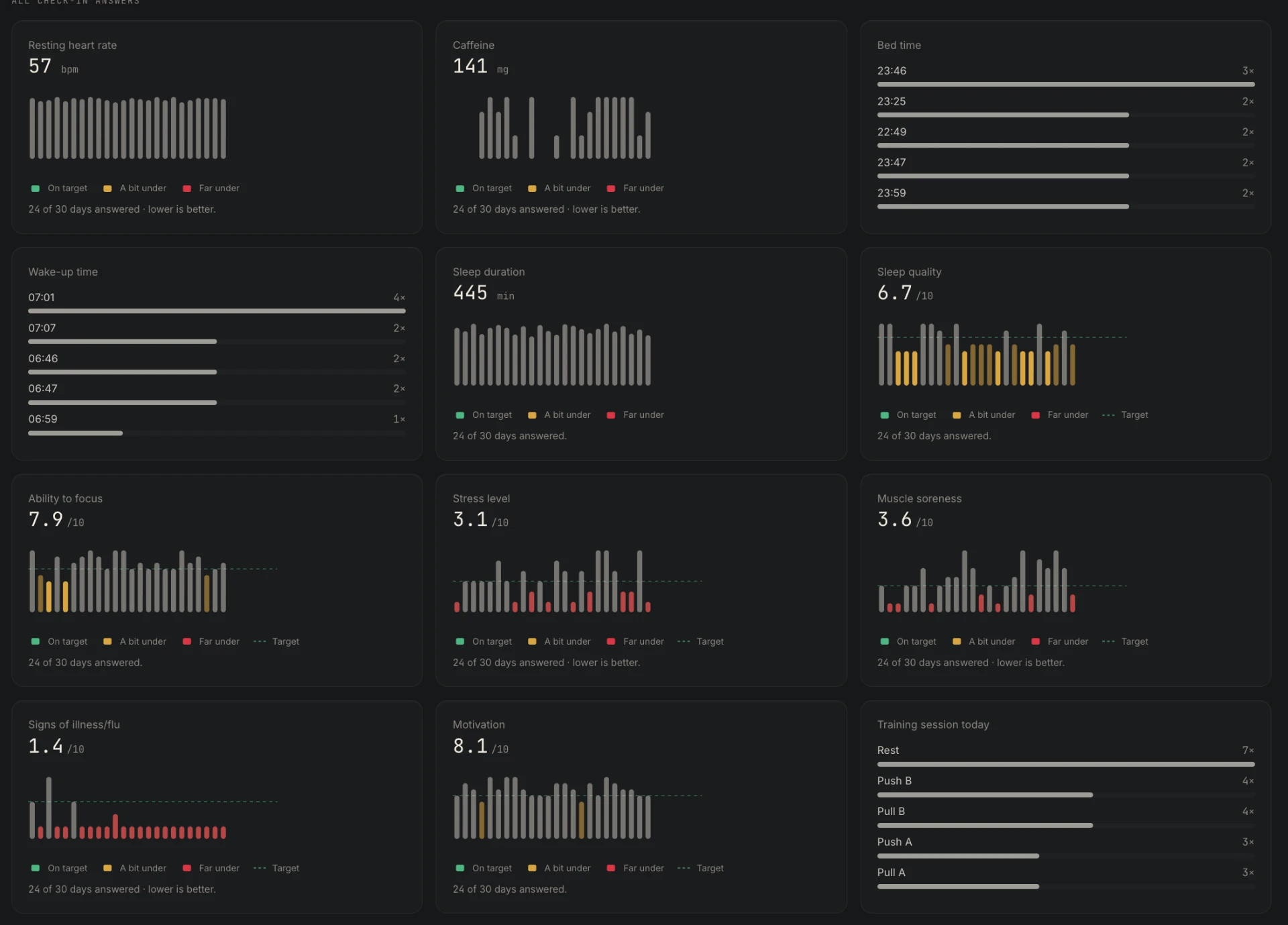
All check-in answers
Every question a client answers in their daily check-in gets its own visual, from resting heart rate and caffeine intake to bed time, wake-up time, sleep duration and quality. Focus, stress, muscle soreness, motivation and even signs of illness are tracked, each with on-target colouring, target lines and daily frequency, so the coach sees the full picture of a client's day without reading a single form.
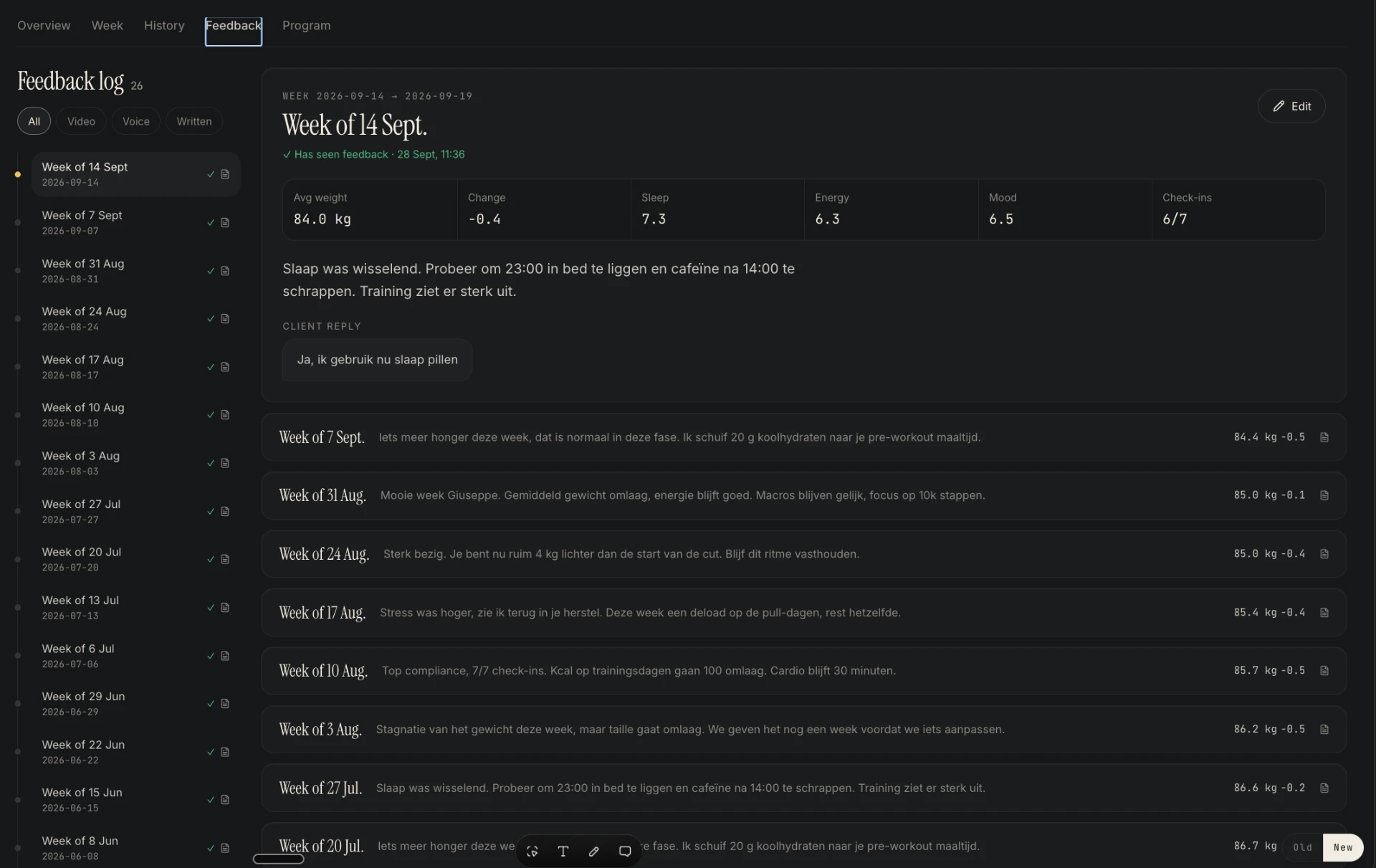
Feedback log
Coaching feedback gets its own timeline. Every weekly review is logged in chronological order with the coach's notes, the client's reply and the week's numbers like average weight, sleep, energy, mood and check-in completion, so the whole coaching conversation stays readable at a glance. Feedback works in whatever format fits the moment: the coach records a video straight from their camera, writes it out, or leaves a voice memo, and each entry is marked as seen once the client has read, watched or listened to it.
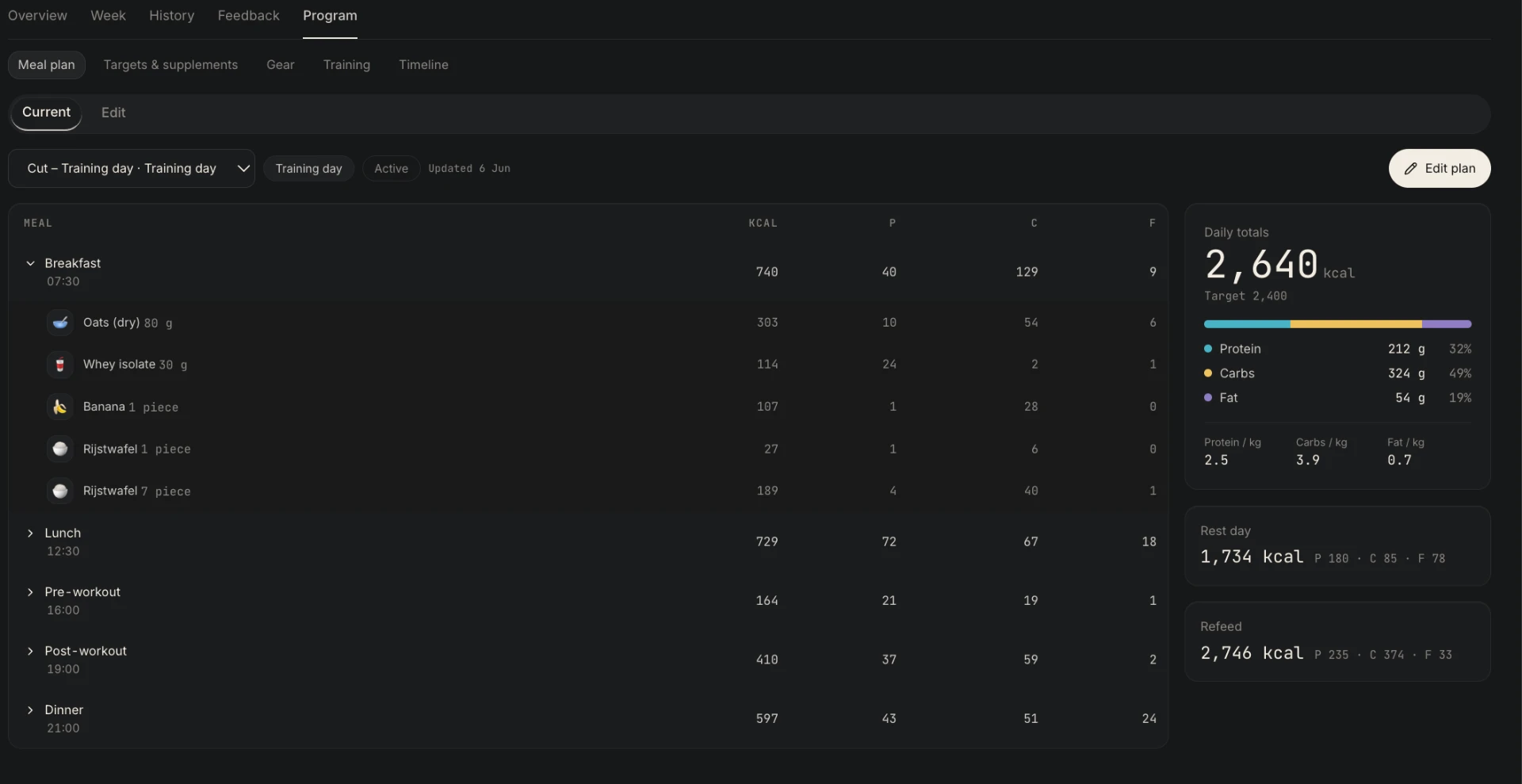
Custom meal plans
Meal plans are built, not copy-pasted. The coach assembles meals from a preloaded food database, and every item carries its own nutrition values so calories, protein, carbs and fat are calculated automatically per meal, per day and per plan variant. Training days, rest days and refeed days sit side by side with their own targets, macro split and per-kilogram breakdowns, and every plan can be swapped or edited live without rebuilding it from scratch.
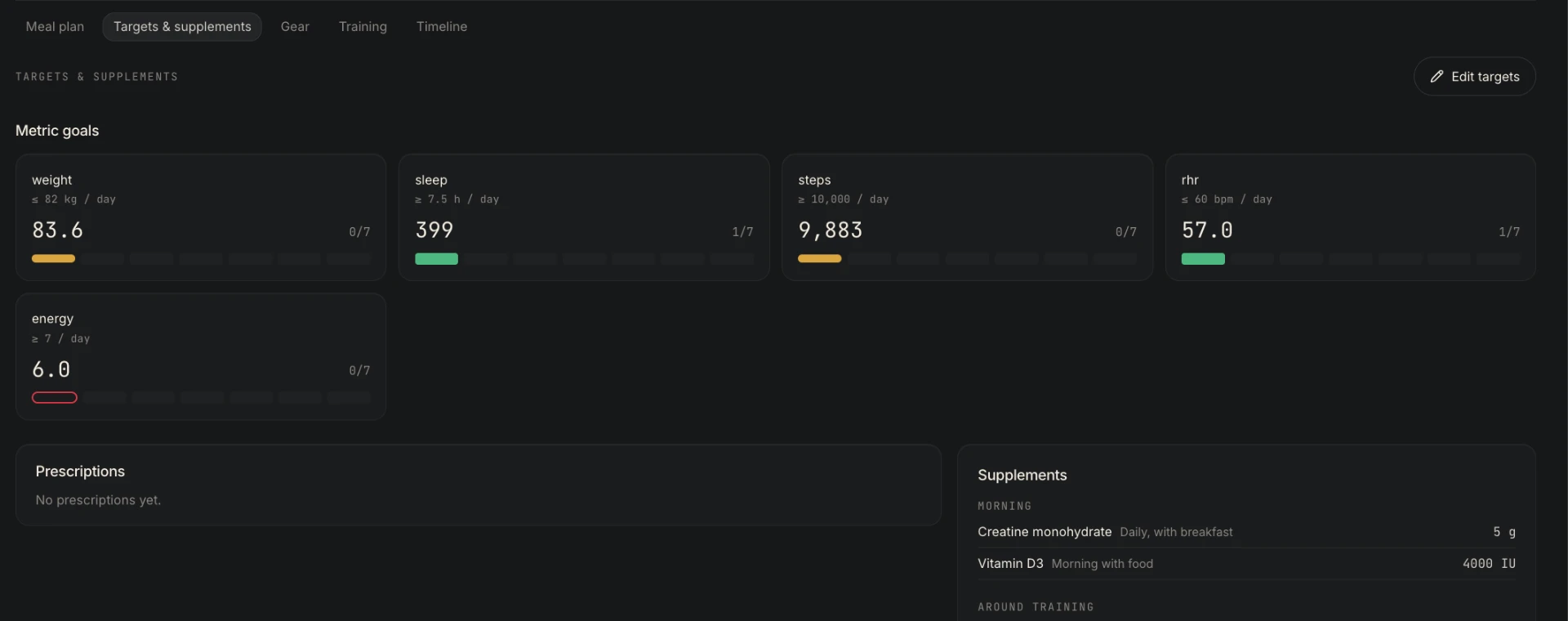
Trackers and goals
Goals are set as trackers, not one-off targets. The coach defines daily, weekly and monthly health goals for weight, sleep, steps, resting heart rate, energy and more, each with its own direction and threshold, like a weight at or under 82 kg or at least 7.5 hours of sleep per day. Every tracker keeps a running 7-day score so both coach and client can see at a glance which goals are being hit, while the same screen carries prescriptions and a scheduled supplement plan from morning to around training.
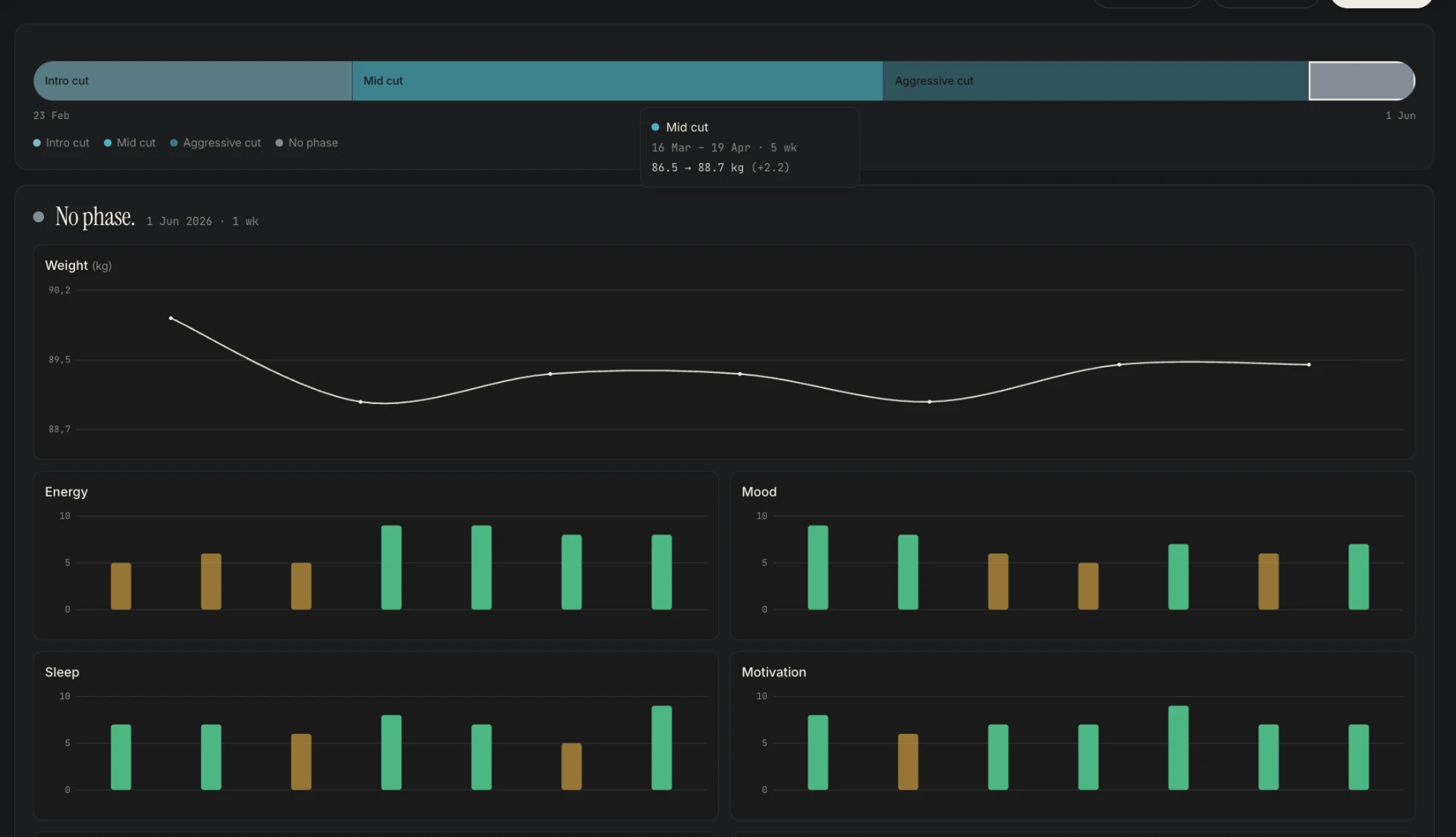
Competition prep timeline
For real bodybuilding schedules, the plan lives on a timeline. Phases like pre-cut, cut, supercut, bulk and preseason are laid out across the calendar so coach and client always see exactly where they are in the prep and what is coming next, with each phase carrying its own window, weight change and colour on the timeline. Hovering or tapping a phase reveals what that block delivered, like 86.5 to 88.7 kg over five weeks, and the metrics underneath are read in the context of that phase, so the numbers always make sense against the goal of the block, whether that is peaking for a bodybuilding contest, a men's fit contest or simply coming in on schedule.
AI coach overview
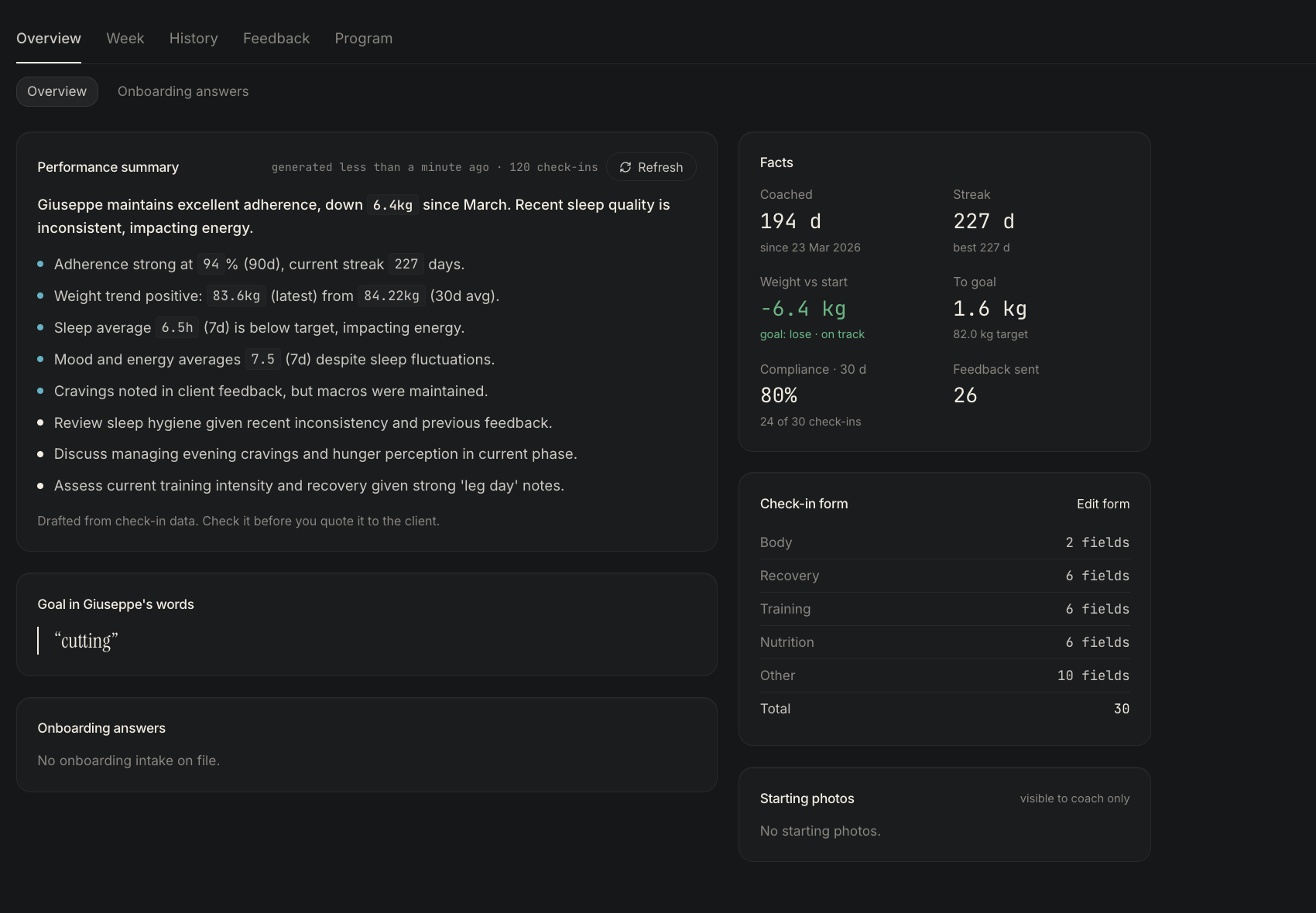
The platform is AI-native at its core. Before every review, it reads the client's check-ins, trends and feedback and drafts a performance summary in plain language: adherence, weight trend against the 30-day average, sleep against target, mood and energy, and the talking points worth raising, from sleep hygiene to training intensity. Beside it sit the facts that matter at a glance, like coaching streak, weight versus start, distance to goal, 30-day compliance and feedback sent. The AI assists, the coach decides: everything is drafted from real check-in data and clearly marked to check before quoting it to the client, so understanding a client's progress, needs and habits takes minutes instead of an hour.
AI assistant chat
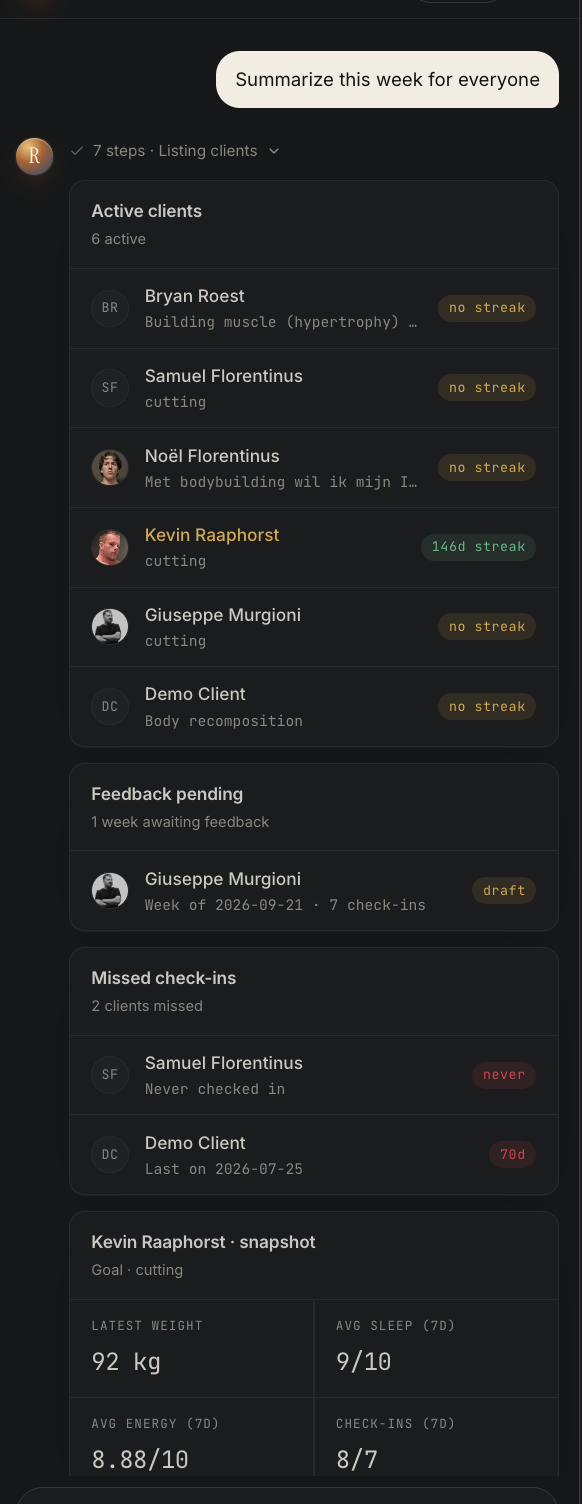
The fastest way to read the coaching is to just ask. In the chat, the coach types anything in plain language, like summarize this week for everyone, and the assistant works through it step by step, showing which step it is on as it goes, like listing clients or scanning check-ins. It answers back with what actually matters: who is active and on a streak, whose feedback is still pending and since when, who missed their check-ins and for how long, plus per-client snapshots with latest weight, average sleep, energy and check-in completion. Ask about a specific client's progress or habits and it reads that client's real check-in data before answering, so the whole roster is a question away instead of a dozen clicks.
Training programs
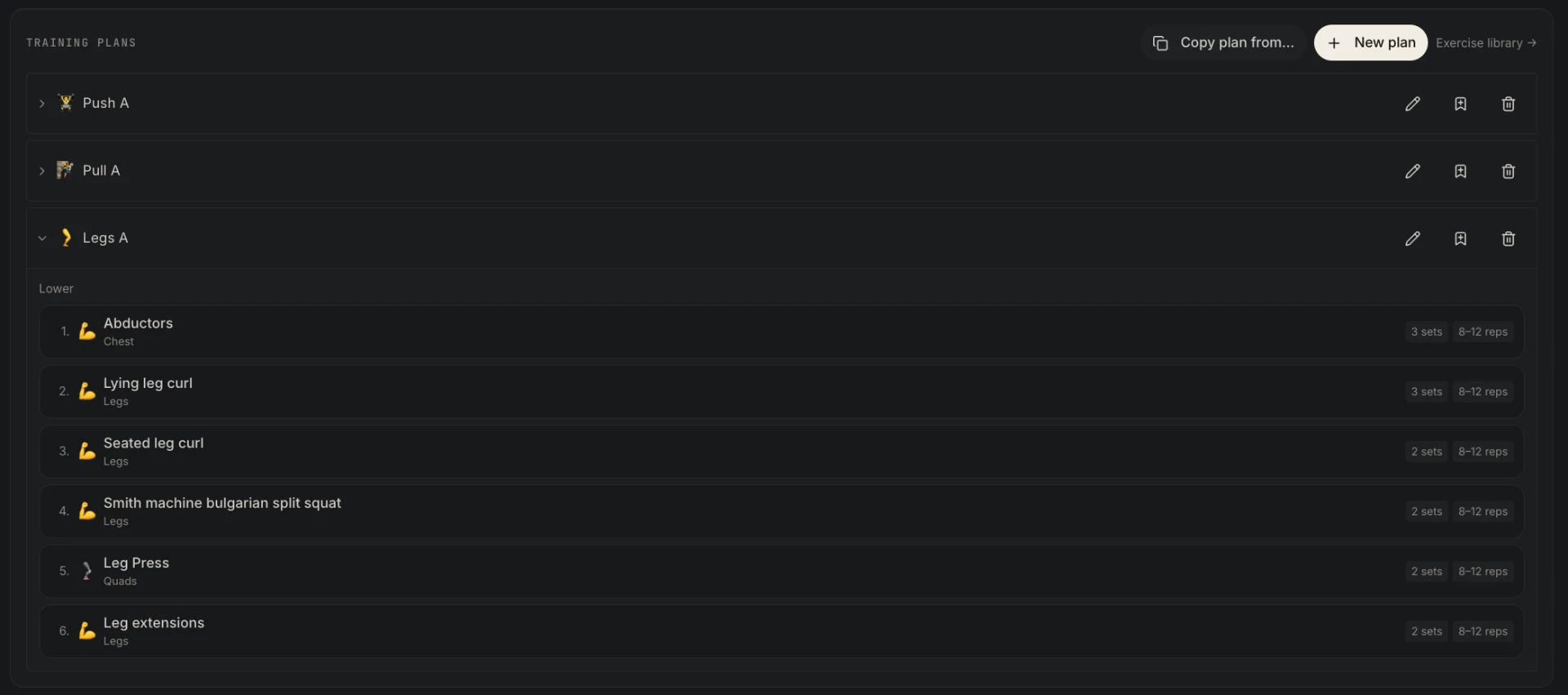
Real bodybuilding programming lives here, not a PDF. The coach builds training plans as split days like Push A, Pull A and Legs A, each day holding an ordered list of exercises with its own muscle group and prescribed sets and rep ranges. Plans can be copied from an existing template instead of rebuilt, duplicated into variants per client, and a shared exercise library keeps every movement consistent, so a new program is minutes of work instead of a rewrite.
Plan performance and benchmarking
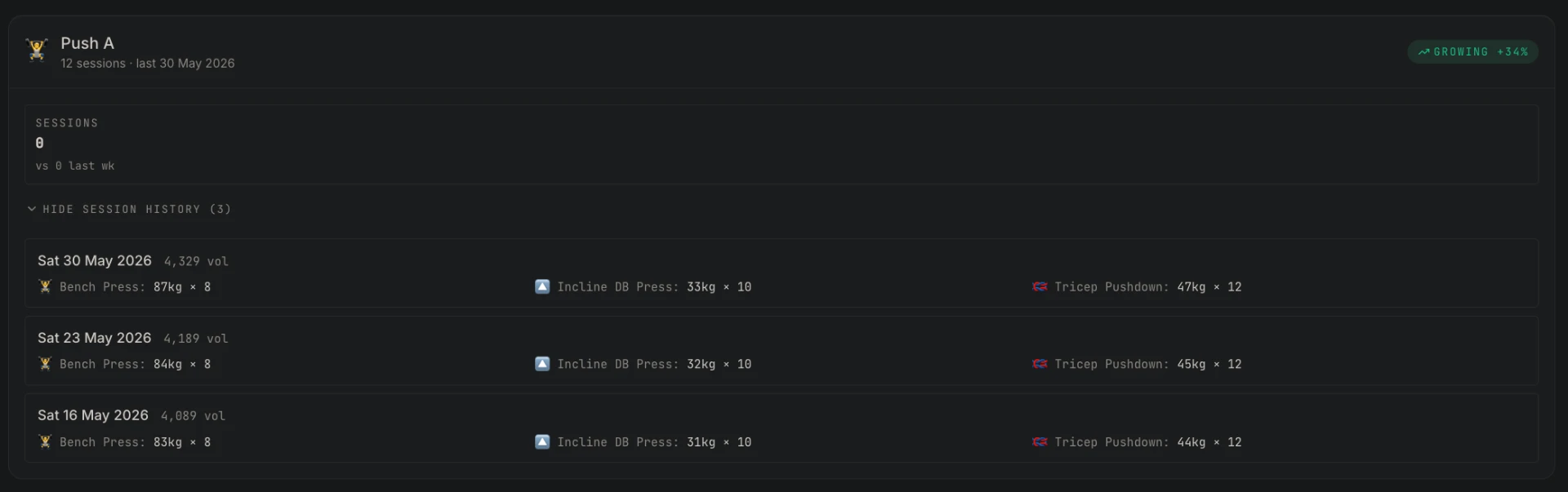
Every training plan tracks its own performance. The coach sees how many sessions the client has run, the volume behind each one, and a full session history with the actual weights lifted per exercise, session by session. Plans are benchmarked against each other too: a trend badge shows whether the plan is progressing, like Push A growing 34 percent in volume, so the coach can compare programs and prove what is actually working instead of guessing.